
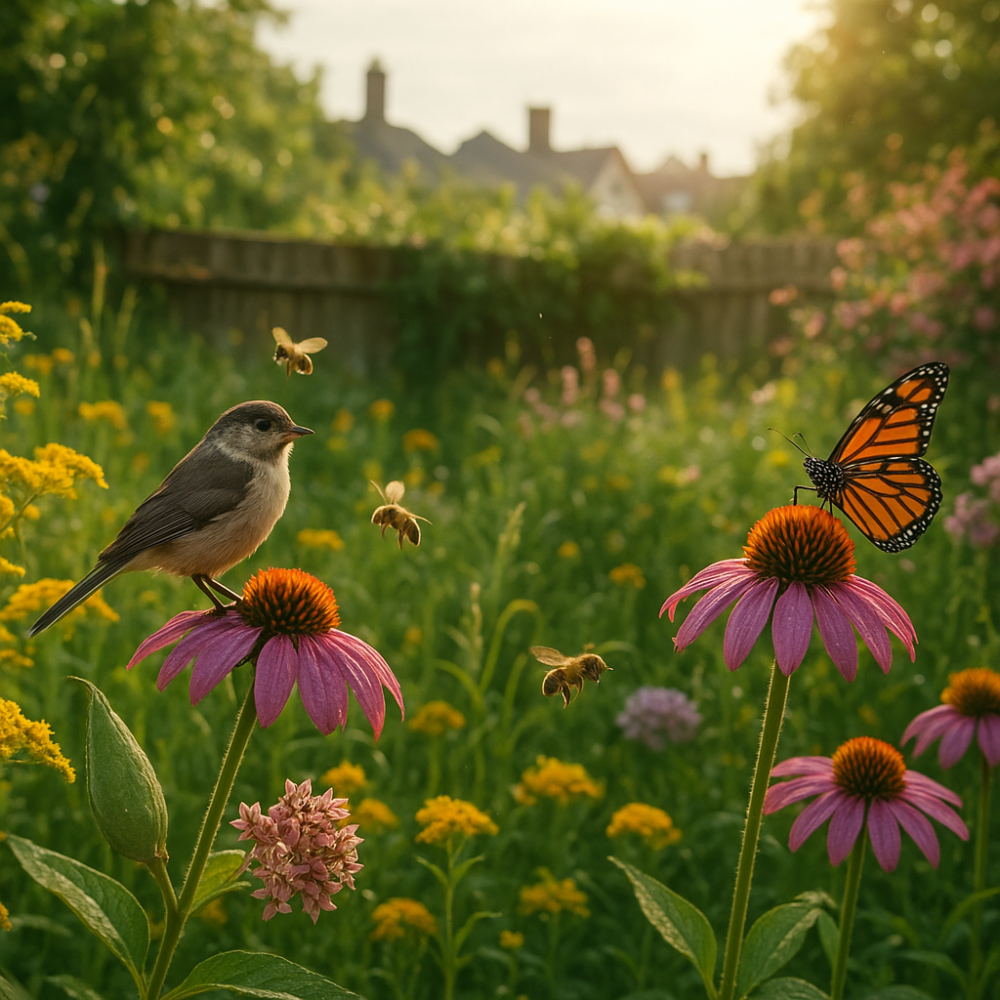
Imagine stepping into your backyard and hearing the hum of native bees moving between flowers, watching a monarch butterfly pause on a milkweed plant, or spotting a songbird plucking berries from a shrub that grew there long before your neighborhood did. This kind of backyard ecosystem doesn’t happen by accident — it starts with a deliberate choice to grow native plants. In urban environments where concrete, turf grass, and ornamental exotics dominate the landscape, that choice carries more ecological weight than most gardeners realize.
Native plants — those that evolved naturally in a specific region without human introduction — are the foundation of healthy local ecosystems. When they’re brought back into urban backyards, something remarkable happens. The food webs reactivate, the soil wakes up, and the garden stops being a static display and starts functioning like a living habitat. This article explores exactly how that transformation unfolds, and what it means for urban gardeners who want to do more with their outdoor space than just keep it tidy.
What Makes a Plant “Native” — and Why It Matters
The term “native plant” gets thrown around loosely, so it’s worth being precise. A native plant is one that has evolved in a particular region over thousands of years, developing relationships with local insects, birds, fungi, and soil organisms. These relationships are deeply specific. Entomologist Doug Tallamy’s research has shown that native oak trees alone support over 500 species of caterpillars, while many popular ornamental trees support fewer than five. That’s not a small difference — it’s an entirely different ecological category.
Non-native ornamentals, even beautiful ones, often offer little to local wildlife. They may lack the right chemical compounds that native insects have co-evolved to recognize, or they may produce fruits that birds can’t properly digest. In contrast, a native serviceberry or elderberry becomes a buffet that local wildlife knows exactly how to use.
It’s also important to note that “native” is geographically specific. A black-eyed Susan native to the Eastern US isn’t the same ecological player in California. Choosing plants native to your specific region — not just broadly to North America — is what makes the difference.
The Ecological Ripple Effect in Urban Backyards
Urban areas cover roughly 3% of the Earth’s land surface, but their ecological impact is disproportionately large. They fragment habitats, increase surface temperatures through the heat island effect, and replace native plant communities with monocultures of turf and exotic ornamentals. The result is a dramatic reduction in biodiversity — fewer insects, fewer birds, fewer soil organisms, and less ecological resilience.
But here’s what’s encouraging: urban backyards, collectively, cover a massive area. In the United States, lawns alone cover an estimated 40 million acres — more than any single agricultural crop. If even a fraction of that were converted to native plantings, the cumulative impact would be enormous. Each individual backyard acts as a stepping stone in a larger wildlife corridor, connecting fragments of natural habitat across an otherwise inhospitable urban matrix.
Supporting Pollinators Beyond Honeybees
When most people think of pollinators, honeybees come to mind first. But native bee species — there are over 4,000 in North America alone — are often far more effective pollinators for native plants, and they’re in serious decline. Bumblebees, mason bees, sweat bees, and mining bees all depend on native plant communities for food and nesting habitat.
Native flowering plants provide the right pollen and nectar composition that these specialist bees need. Some bee species are oligolectic, meaning they collect pollen from only one or a few plant genera. A squash bee, for example, relies almost entirely on plants in the Cucurbita family, while certain mining bees are specialists of goldenrod or asters. Without these plants, those bee populations simply collapse locally.
Planting a diverse mix of native species that bloom from early spring through late fall ensures continuous forage for pollinators throughout the season — something a typical ornamental garden rarely achieves.
Rebuilding Bird Habitat from the Ground Up
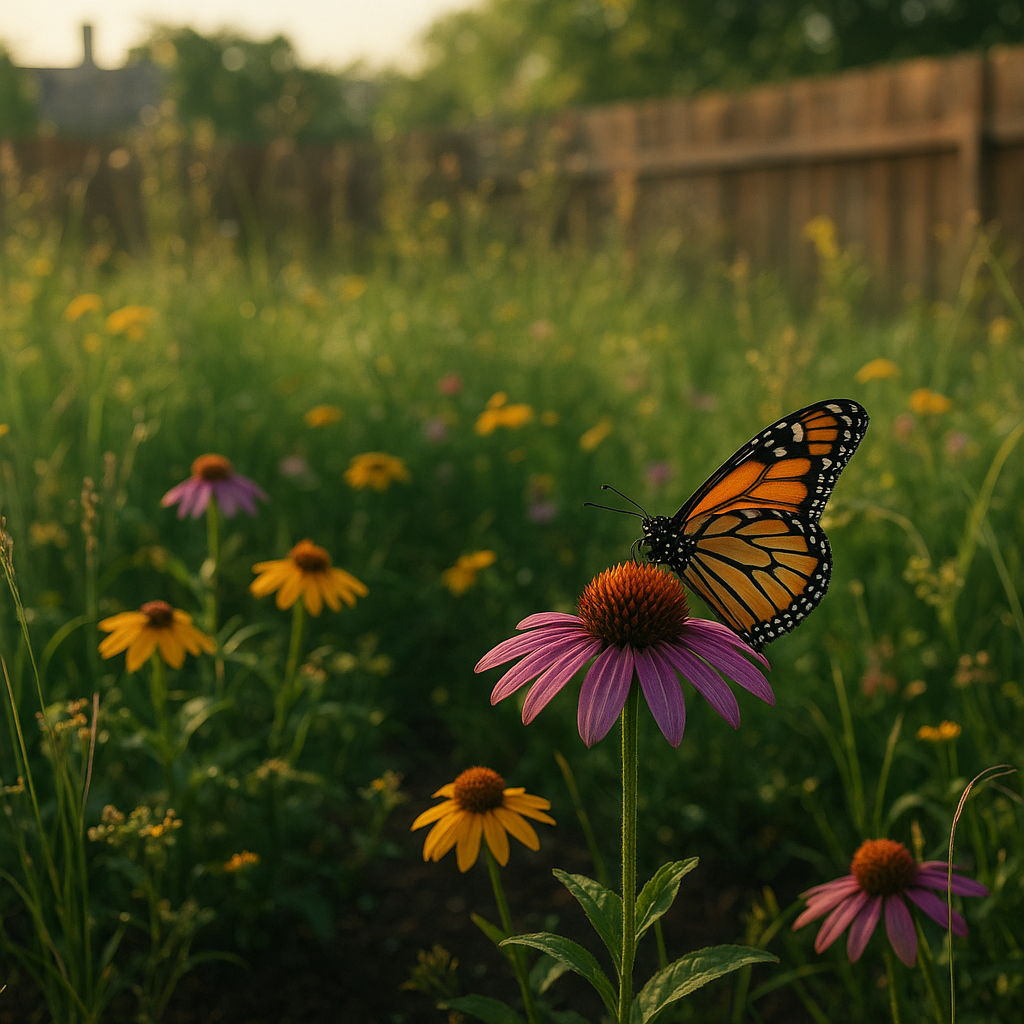
Birds need more than seeds and feeders. They need caterpillars — specifically, the caterpillars of native moths and butterflies — to feed their young. Research by Tallamy and colleagues found that a single pair of nesting chickadees needs between 6,000 and 9,000 caterpillars to raise one clutch of chicks. Those caterpillars overwhelmingly come from native plants.
Native shrubs and trees also provide nesting sites, shelter from predators, and late-season berries that give migrating birds the calories they need for long journeys. Species like native viburnums, dogwoods, and spicebush are particularly valuable. Even a single native shrub added to an otherwise conventional garden can meaningfully increase bird activity in a backyard.
Soil Health and the Underground Ecosystem
The transformation that native plants trigger isn’t only visible above ground. Below the surface, something equally important is happening. Native plants have deep, extensive root systems adapted to local soil conditions. Tall prairie grasses like little bluestem can send roots 10 feet or more into the ground, dramatically improving water infiltration, reducing runoff, and building soil organic matter over time.
These root systems also support complex communities of mycorrhizal fungi — symbiotic organisms that extend the plant’s reach for water and nutrients while receiving sugars in return. This underground fungal network, sometimes called the “wood wide web,” connects plants to each other and to soil organisms in ways that support the entire ecosystem. Many native plants are more effective at establishing these fungal partnerships than exotic species, particularly in disturbed urban soils.
Less compaction, better water retention, and higher organic matter mean that a native plant garden gradually improves the soil it grows in — the opposite of conventional lawns, which often require ongoing inputs just to maintain their condition.
Practical Steps for Transitioning to Native Plants
The good news for urban gardeners is that you don’t need to tear out your entire backyard to start seeing results. Even small additions of native plants can have measurable ecological benefits. Here’s how to approach the transition thoughtfully:
Start with a Regional Plant List
Local native plant societies, university extension programs, and conservation organizations typically maintain region-specific plant lists. Resources like the Audubon Society’s Native Plant Finder allow gardeners to search by zip code and find plants matched to local bird and butterfly species. Starting with a regionally appropriate list prevents the common mistake of buying “native” plants that are actually native to a different part of the country.
Choose Plants for Multiple Functions
- Caterpillar host plants: Oaks, willows, cherries, and native asters support the highest numbers of caterpillar species and should be prioritized when possible.
- Pollinator forage: Native coneflowers, bee balm, goldenrod, milkweed, and wild bergamot provide pollen and nectar across different seasons.
- Berry-producing shrubs: Elderberry, native viburnums, serviceberry, and dogwoods provide critical food for birds, especially during migration.
- Ground cover: Native ferns, wild ginger, and low-growing sedges replace turf grass while providing habitat structure for ground-nesting insects.
Layer the Planting Like a Natural Habitat
Natural ecosystems aren’t flat. They have a canopy, an understory, a shrub layer, an herbaceous layer, and a ground cover layer. Replicating this structure — even on a small scale — dramatically increases the habitat value of a backyard. A small native tree like a redbud or serviceberry provides the canopy layer, native shrubs fill the mid-level, and a mix of perennials and ground covers occupies the lower levels. Each layer serves different species and creates a more resilient, self-sustaining system.
Reduce or Eliminate Lawn
Conventional turf grass is one of the least ecologically productive surfaces in any garden. It supports almost no native insects, requires significant water and maintenance, and contributes to soil compaction. Replacing even a portion of a lawn with native plantings — through a process sometimes called “lawn conversion” — can rapidly increase biodiversity. If you’re thinking about redesigning your outdoor space at the same time, combining ecological goals with a low-maintenance layout can make the transition even more rewarding. Even a 10-foot border of native perennials along a fence line starts the process.
Rethink Fall and Winter Cleanup
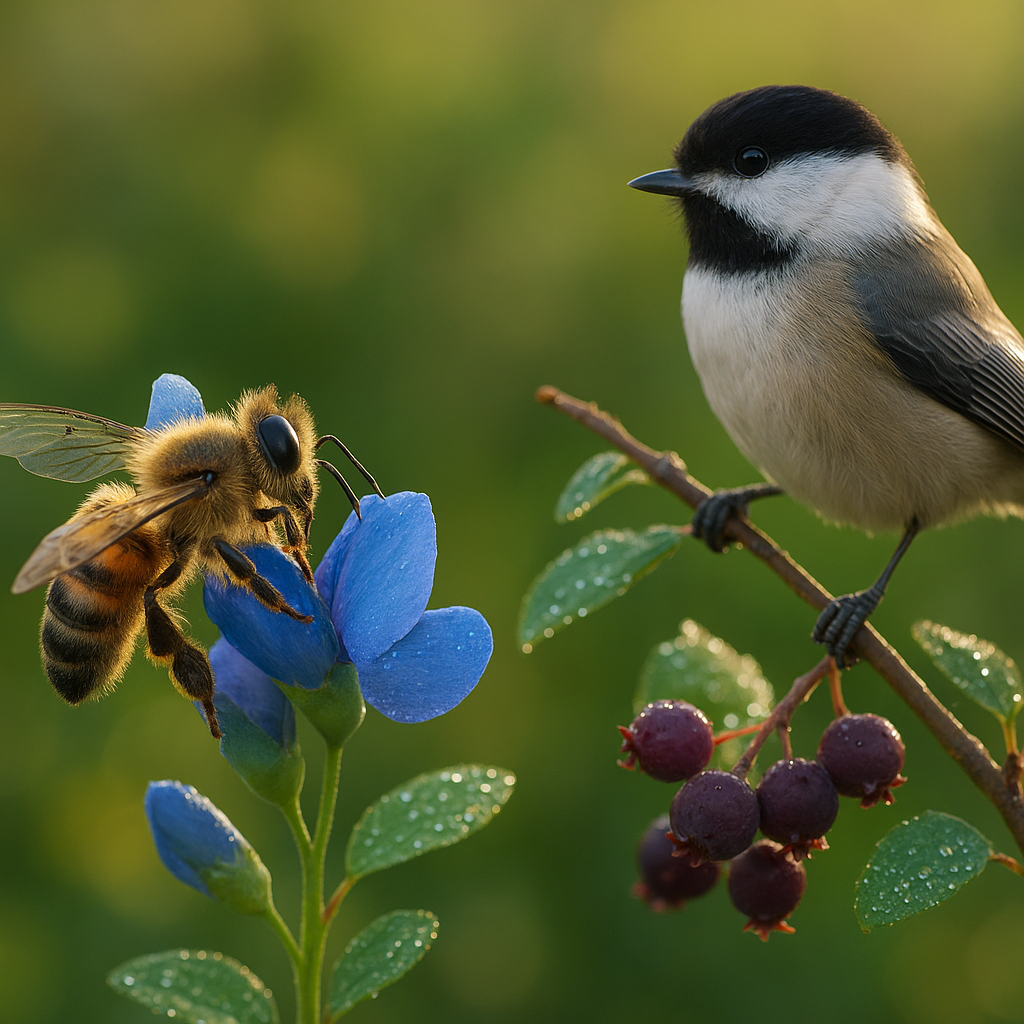
One of the most impactful — and counterintuitive — things a gardener can do is less. Leaving perennial stalks standing through winter provides overwintering habitat for native bees that nest in hollow stems. Leaving leaf litter in place protects the pupae of native moths and butterflies. Many of the “messy” elements of a natural garden are exactly what make it function ecologically. Cleaning up in spring rather than fall gives these organisms time to complete their life cycles.
Common Misconceptions About Native Plant Gardens
A frequent concern is that native plant gardens will look wild or unkempt in a neighborhood context. This is worth addressing directly. Native plants can be arranged in formal, designed settings that are clearly intentional and visually appealing. The “messy” stereotype usually applies to gardens that haven’t been thoughtfully designed, not native plants themselves. Pairing native species with clean edging, defined pathways, and structural hardscape elements communicates intentionality and tends to satisfy even the most aesthetic-focused neighbors.
Another misconception is that native plants are difficult to establish. In reality, once established in appropriate conditions, most native plants require significantly less water, fertilizer, and maintenance than their exotic counterparts — because they’re adapted to local rainfall patterns, soil types, and seasonal rhythms. The first year or two may require some attention, including knowing when and how to repot your plants as they mature, but the long-term investment in maintenance goes down, not up.
The Bigger Picture: Urban Backyards as Conservation Land
It’s easy to feel like a single backyard is too small to matter ecologically. But scale is relative. When tens of thousands of urban gardeners make the same shift — even partially — the collective landscape changes meaningfully. Scientists have documented that neighborhoods with higher densities of native plantings support significantly more bird and insect species than those without. The concept of “homegrown national parks,” popularized by Tallamy’s work, frames private gardens as distributed conservation areas that, together, can rival the footprint of official protected lands.
Urban backyards are also uniquely positioned to function as refugia — safe harbors for species displaced by habitat loss elsewhere. As climate change pushes many species to shift their ranges, urban green spaces with native plants may become critical waypoints in an increasingly fragmented landscape.
Bringing It All Together
Native plants do something that no amount of conventional gardening can replicate: they reconnect the urban landscape to the ecological processes that make it livable. They support the insects that feed the birds, the fungi that feed the trees, and the food webs that keep a backyard ecosystem genuinely alive rather than merely decorative.
The transformation doesn’t require a complete garden overhaul or a large budget. It starts with a single plant — a milkweed, a native aster, a serviceberry — and grows from there. Over time, the cumulative effect of those choices, multiplied across backyards and neighborhoods, adds up to something far larger than any individual garden. That’s the quiet power of planting native: it turns a private outdoor space into a working piece of a larger living system, one plant at a time.